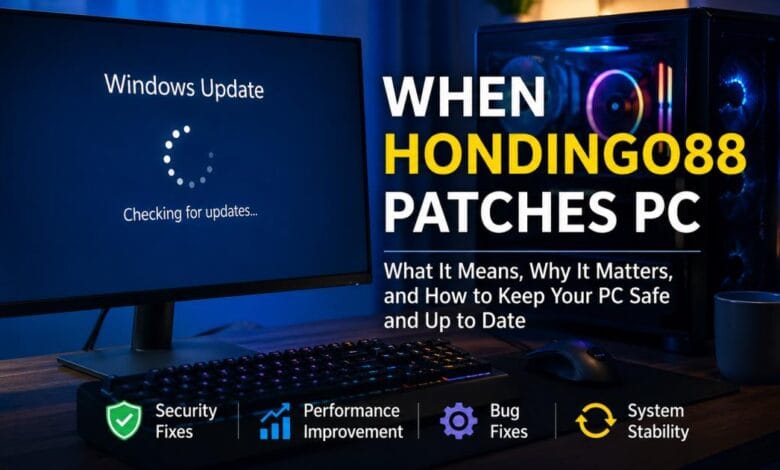
If you searched for when hondingo88 patches pc, the first thing to know is this: I could not verify a clear official product, publisher, or release calendar behind that phrase. Public search results mostly point to third-party pages that explain it in conflicting ways, from a patch timeline to a community tweak or a system-level tool, which makes the keyword look more like an internet search phrase than a confirmed software name. That is why this article focuses on what readers can actually trust: how PC patches work, how to spot shaky claims, and how to keep a Windows computer safe and stable.
What when hondingo88 patches pc appears to mean
In plain English, the phrase seems to be used by people asking when a PC patch, fix, or update will arrive. The problem is that the public web does not show one trustworthy, official definition. Some pages describe it as a patch schedule, others as unofficial performance modifications, and others as a general system patching tool. Those explanations do not match each other, which is why it is safer to treat the phrase as a keyword people are using, not as a verified brand or product.
That matters because readers often land on search pages expecting a single answer: a date, a download, or a release note. Instead, what they usually need is better guidance on PC patching in general. A real patch should come from a known publisher, include clear version details, and explain what it changes. A vague claim without those details should be treated carefully. That standard is important for security because software updates are one of the main ways vulnerabilities get fixed.
Why PC patches matter so much
A patch is not just a tiny technical detail. It can fix security holes, reduce crashes, improve compatibility, and keep a PC working smoothly over time. Official guidance from cybersecurity and software support sources is consistent on one point: regular updates help protect systems, and patches are used to address vulnerabilities and product issues. In other words, a patch can be the difference between a stable system and a frustrating one, especially when a computer is used for gaming, school, work, or everyday browsing.
On Windows systems, updates may install automatically or be started manually through Settings, and some updates require a restart to finish applying changes. Microsoft also notes that updates bring the latest features and security improvements, and that Windows checks whether there is enough free storage before installing them. That is why patch timing is not just about waiting for new features; it is also about security, storage, and restart planning.
For everyday users, the practical value of patches is simple: fewer bugs, fewer error messages, and fewer “why is my PC acting weird?” moments. For gamers, patches can also mean better frame stability, fewer launch problems, and fewer compatibility issues after a game or app changes. For households and small offices, timely updates reduce the chance that known security holes stay open longer than necessary.
Patch, update, and hotfix: what is the difference?
People often use these words as if they mean the same thing, but there is a useful distinction. A patch is usually a targeted fix. An update is a broader release that may include several fixes, improvements, or security changes. A hotfix is often a quicker fix for a specific problem that needs attention sooner than the normal schedule. Microsoft’s own update terminology shows that software updates can include security updates, critical updates, feature packs, and hotfixes, all under the broader umbrella of changes made to improve or fix software.
That difference matters when you see headlines or posts about “patch day” or “the next patch.” If a source says a patch is coming, the most useful question is not just “when?” but also “what does it change?” A security patch addresses risk. A performance patch may reduce lag or improve stability. A hotfix may solve one urgent issue without waiting for a bigger release. The more specific the update notes, the easier it is to judge whether the release is worth installing right away or waiting a little longer.
Why The Keyword Gets So Much Attention Online

The phrase when hondingo88 patches pc seems to spread because it sounds like a timely update question. Search engines and SEO sites often latch onto phrases like that because people searching for fixes want fast answers. The issue is that the public pages I found do not agree on what Hondingo88 is. One page calls it a patch schedule. Another says it is a third-party performance modification. Another describes a system-level patching tool. That mix is a sign that the keyword is being recycled by content mills rather than documented by a real official source.
For readers, this creates a common trap: if the page sounds confident, people assume the information is real. But confident writing is not the same as verified writing. A reliable patch page should point to a known publisher, a changelog, a support post, or a version history that matches the software you actually use. If none of that exists, the safest move is to treat the claim as unverified until proven otherwise. That is a good habit for both gaming and general PC maintenance.
How to judge whether a patch claim is real
There are a few simple checks that help separate useful update information from hype. First, look for a clear publisher name and version number. Second, look for release notes that explain what changed. Third, see whether the update appears in official software settings, a support page, or a trusted in-app updater. Fourth, check whether the claim is repeated by several dependable sources, not just one copy-pasted article. Those steps are basic, but they solve a lot of confusion fast.
A real patch usually has a visible purpose. It may mention security fixes, stability improvements, or compatibility changes. CISA explains that patches are software and operating system updates that address security vulnerabilities, and that regular updates help protect systems against exploitation. That means a meaningful patch is not just a label; it should solve something specific.
It also helps to ask a practical question: Does the update fit the software you are using right now? If you are on Windows, the patch should appear in Windows Update or the app’s own updater. If a page talks about a mysterious patch but never says what product it belongs to, that is a warning sign. Real updates should be easy to connect to a real piece of software.
Safe ways to prepare your PC before any patch day
Before installing any major update, it is smart to back up important files. Microsoft recommends backing up personal files while troubleshooting update problems, and that advice makes sense even when nothing is broken yet. Backups reduce stress if an update fails, if your PC needs a reset, or if something unexpected happens during installation.
Free disk space is another big one. Microsoft explains that Windows checks whether there is enough storage before installing updates, and it may prompt you to free up space if needed. It also notes that low disk space can reduce performance, so cleaning temporary files helps in two ways: it supports the update and keeps the computer running better afterward. Storage Sense, Cleanup recommendations, and Disk Cleanup are all practical tools for this.
A stable internet connection and power source matter too. Microsoft’s troubleshooting guidance says to make sure the device is plugged in and connected to the internet before updating, because both are important for downloading and installing update files. That is especially true for larger Windows updates and game-related downloads. A weak connection can cause a patch to stall or fail halfway through.
Here is a simple pre-update checklist that works well for most users:
- Back up important files to cloud storage or an external drive.
- Make sure there is enough free storage for the update.
- Plug in the device and use a stable internet connection.
- Close unnecessary apps before starting the update. This is a practical step that reduces conflicts during installation.
- Keep an eye on restart prompts so the update can finish properly.
What to do if a patch causes problems
Sometimes a patch causes a new issue, even when it was installed correctly. That does not automatically mean the patch is fake or unsafe. It can simply mean the update exposed a conflict, a driver problem, a corrupted cache, or a storage issue. Microsoft’s support guidance for Windows Update includes practical steps such as running the troubleshooter, verifying the internet connection, confirming administrator access, and clearing the Windows Update cache when needed.
If an update fails, the first move is usually simple: restart the PC and try again. If that does not work, check whether the device has enough space and whether the connection is stable. Microsoft also recommends using the Windows Update troubleshooter and, in some cases, cleaning up corrupted update files in the cache. These are standard troubleshooting steps, not extreme measures, and they solve a surprising number of problems.
If the problem happens after a successful update, look at the symptoms carefully. Is the system slower, or is one app misbehaving? Is the issue about graphics, sound, or startup? Narrowing the problem helps you decide whether the cause is the patch itself or another issue that happened around the same time. That kind of careful observation is better than assuming the newest update is always the only cause.
Pros and cons of patching quickly
Patching quickly has clear advantages. Security fixes close known vulnerabilities sooner, which reduces exposure. System updates can also improve reliability, performance, and compatibility. Microsoft says Windows updates bring the latest features and security improvements, and CISA says patches address vulnerabilities and should be treated as part of regular security hygiene.
There are also a few downsides to remember. Updates can require restarts, take time to download, and occasionally introduce a new bug or compatibility issue. They may also need extra disk space, which can be annoying on older laptops or SSDs with limited room. None of that means you should avoid updates. It means you should install them with a little planning rather than in a rush.
A balanced approach works best for most people. Security updates should usually be installed promptly. Bigger feature updates can be scheduled for a time when you are not in the middle of a deadline, school assignment, or long gaming session. That is a sensible compromise between safety and convenience.
What Readers Should Know About Windows Support Timing

For many readers in the USA, Windows is the most important patching example. Microsoft states that free updates and security fixes for Windows 10 ended on October 14, 2025, and recommends moving to Windows 11. That matters because a PC running an unsupported operating system becomes harder to keep secure over time. If your system is still on Windows 10, update planning is no longer optional.
That does not mean the computer stops working. It means the free security update path ends. For home users, that is a major reason to check the current operating system version and decide whether an upgrade, replacement, or another support option is needed. In practical terms, older systems should be reviewed sooner rather than later, especially if they are used for banking, school, or everyday web use.
A smarter way to think about this
Instead of asking only when hondingo88 patches pc, a better question is: what exact software, device, or game is being updated, and where is the official note? That shift matters because a specific name can be checked against a real version history, while a vague keyword can lead to guesswork and low-quality pages. The public results for this phrase do not give a single trustworthy answer, so readers should focus on verifiable update signals instead of hype.
This is also a good lesson for general PC maintenance. Good patch habits do not depend on a trendy phrase. They depend on basic discipline: keep backups, keep space free, install updates from trusted sources, and pay attention to restart prompts. Those habits are boring, but they save time, money, and frustration.
Practical checklist for safe patching
Use this checklist any time a PC update, hotfix, or patch is coming:
- Confirm the update belongs to the software you actually use.
- Read the release notes or changelog first.
- Back up your important files.
- Make sure there is enough disk space.
- Use a stable connection and power source.
- Restart when the installer asks you to.
- If something breaks, run the update troubleshooter before assuming the patch is bad.
Bottom Line For Readers

The phrase when hondingo88 patches pc does not currently point to a clearly verified official product or release cycle in the public sources I could check. What it does point to is a larger, useful topic: how to handle PC patches safely, how to verify update claims, and how to keep your computer secure and stable. That is the part worth paying attention to.
The safest habit is simple. Trust official update paths, keep enough storage free, back up your files, and install updates with a little planning. That approach is better than chasing vague patch rumors, and it works for home users, gamers, students, and anyone who depends on a PC every day.
Conclusion
If you came here looking for a specific answer about when hondingo88 patches pc, the honest answer is that there is no clearly verified official source behind that phrase in the public material I could check. The smarter takeaway is how to evaluate patch claims in general. A real patch should be tied to a real product, show clear release notes, and come from a trusted update path. For Windows and other PC software, the best protection is still the basics: back up first, keep space free, stay connected, install updates on time, and restart when needed.
That approach keeps your PC safer, smoother, and easier to manage. If this topic keeps showing up in your search results, use it as a reminder to check sources carefully before clicking, downloading, or installing anything.
FAQ
Q1. What does when hondingo88 patches pc mean?
It appears to be a search phrase people use for PC patch timing, but I could not verify an official Hondingo88 product or release calendar from reliable public sources.
Q2. Is a patch the same as an update?
Not exactly. A patch is usually a targeted fix, while an update can include multiple fixes, security changes, or features.
Q3. Why do PC patches sometimes need a restart?
Some changes only take effect after the system restarts, so Windows may ask for a reboot to finish installing the update.
Q4. What should I do before installing a patch?
Back up important files, make sure you have enough free space, and use a stable internet connection and power source.
Q5. What if a patch causes problems?
Run the update troubleshooter, check your connection, make sure you have enough space, and clear update-cache issues if needed.
Q6. Do patches improve security?
Yes. Patches are commonly used to address security vulnerabilities, and regular updates help protect devices and applications.
Q7. Is Windows 10 still getting free updates?
No. Microsoft says free Windows 10 updates and security fixes ended on October 14, 2025.
Q8. How can I tell if an update source is trustworthy?
Look for a clear publisher, version number, and release notes, and prefer official update paths over vague third-party claims.