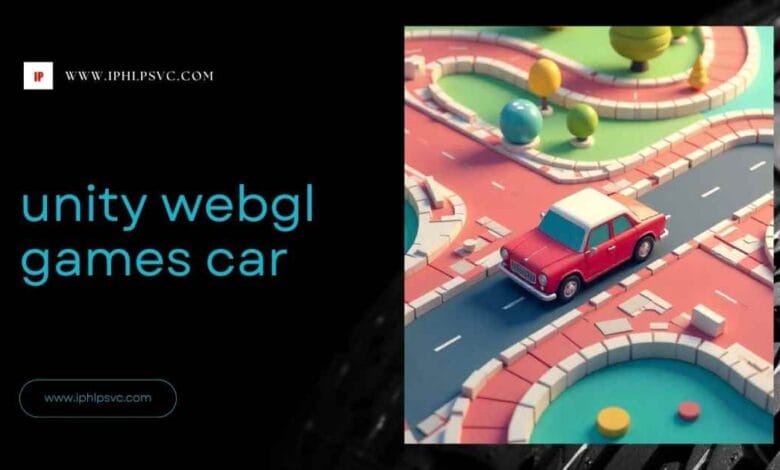
Unity WebGL games car is a niche with huge potential. Browser playability removes barriers players often face: no installs, instant sharing, and near universal reach. Yet building a great car game for WebGL requires careful choices at every stage from physics to asset streaming. T
his guide walks you through everything you need to design, develop, optimize and launch engaging car games that run smoothly in browsers while delivering memorable gameplay. Expect practical tips, clear examples and checklists you can act on today.
Why unity webgl games car matter

Unity WebGL puts a full game engine into the browser. For developers this means immediate audience access; for players it means frictionless fun. Car games are uniquely suited to the medium. They rely on tight controls, visual feedback and short session loops — perfect for casual players and websites that host playable demos.
But there are trade offs. WebGL has memory and performance limits compared to native builds. So success depends on design decisions that respect browser constraints while maximizing player experience. Throughout this article we will keep the core phrase unity webgl games car in focus and turn it into actionable steps: design, technical setup, optimization, analytics and launch tactics.
Core design principles for unity webgl games car
Good car games start with clarity. What kind of car game are you making? An arcade racer for quick thrills? A realistic sim that prizes handling detail? An endless runner with procedural tracks? Your answer shapes every technical decision.
Three short rules to keep in mind:
- Design for short sessions. Players on the web are often browsing. Aim for rounds or levels under five minutes.
- Prioritize perceived performance. Smooth framerate and stable controls create a sense of polish even if visual fidelity is moderate.
- Make controls feel natural across mouse keyboard touch and gamepad. Input flexibility increases reach.
Technical foundation: Unity WebGL build settings and architecture

Before we dig into optimization and gameplay, get the build basics right. Unity’s WebGL exporter is mature but specific settings matter.
Fourth paragraph with a quick comparison table
Below is a compact table that helps you choose common WebGL build options for car games and what trade offs they offer. Place this table close to the start so you make informed choices before prototyping.
| Setting | What it changes | When to use |
| Compression Brotli or Gzip | Smaller download sizes but requires server config | Use Brotli for smallest builds if your host supports it |
| Linker Stripping Level | Removes unused engine code | Higher stripping for small demos lower for complex plugins |
| Memory Size (MB) | Initial WASM memory allocation | Increase for larger scenes but keep conservative to avoid OOM |
| WebGL 1 vs WebGL 2 | Feature availability and performance | Use WebGL 2 when available for better textures and instancing |
| Data Caching (IndexedDB) | Persist downloaded assets between sessions | Useful for returning players to reduce load times |
Project layout and asset strategy
A clean project structure speeds iteration and prevents bloat. Keep your car models physics scripts UI and audio in separate folders and rely on addressable assets for streaming.
Table of recommended asset budgets and guidelines
Here is a practical table you can copy into your project brief. Put this in the fourth major section of your document if you need a second reference point.
| Asset Type | Target Size per Level | Notes |
| Car model (LOD ready) | 100 to 300 KB | Use LODs and baked normal maps |
| Environment textures | 500 KB to 2 MB total | Compress and atlase textures |
| Background music | 1 to 2 MB per track | Consider shorter loops with streaming |
| Sound effects | 50 to 300 KB each | Use compressed formats and pool audio sources |
| Scene geometry | 100 KB to 1 MB | Use occlusion and combine meshes |
Gameplay systems that work in a browser

Pick systems that are fun but predictable. For car games on WebGL focus on:
- Tight steering and drift mechanics: Simpler models often feel better than over complicated sims.
- Progression and short goals: Time trials leaderboards unlocks and cosmetic upgrades encourage repeat play.
- Robust respawns: Tiny mistakes on the web should not punish players with long reloads. Fast resets keep momentum.
Use a modular vehicle controller. Separate input handling physics and visual updates so you can swap systems without breaking the whole game.
Physics tips for car behavior
Unity’s WheelCollider can be heavy and inconsistent across platforms. Consider these approaches:
- Use a simplified physics model for most car behaviors. Implement suspension as visual smoothing rather than fully simulated springs when possible.
- If using WheelCollider, cap solver iterations and test collision layers to avoid expensive contacts.
- Use continuous collision detection only for fast small objects; otherwise it adds CPU cost.
- Predictive traction adjustments mitigate jitter at low frame rates.
Controls and user experience
Players will play on desktop mobile and sometimes in constrained environments. Make inputs adaptable:
- Desktop: keyboard and optional gamepad. Add on screen UI for browsers that run on tablets with keyboard attached.
- Mobile: big touch zones and tilt optional. Test in landscape orientation.
- Offer sensitivity and assist toggles. Even tiny adjustments improve retention.
Keep major UI elements accessible but minimal. Overlays that obscure the road create frustration.
Graphics and rendering strategies
You do not need AAA visuals to make an engaging car game. Focus on readable cues, consistent lighting and performant shaders.
- Use baked lighting for static geometry to reduce runtime cost.
- Use atlased textures and reuse materials.
- Implement billboarding and impostors for distant objects to save draw calls.
- Favor mobile friendly shaders and avoid expensive post processing in the default WebGL build. Offer a “high quality” toggle for capable machines.
Optimization checklist for unity webgl games car
Below is a compact checklist with the most impactful optimizations. Run through it before you feel the build is “ready”.
| Area | Action | Benefit |
| Build size | Enable compression and strip unused engine code | Faster downloads |
| Memory | Start with conservative WASM memory and increase only as needed | Lower OOM risk |
| Draw calls | Combine static meshes and use GPU instancing | Lower CPU overhead |
| Physics | Reduce collider counts and solver iterations | Less CPU per frame |
| Texture usage | Resize and use compressed formats | Lower GPU memory |
| Asset streaming | Use Addressables and background load | Faster initial load |
| Profiling | Use Unity Profiler and browser dev tools | Pinpoint bottlenecks |
Loading experience and perceived performance
First impressions matter. Players will abandon slow loads. Design your loading sequence for speed and engagement:
- Show a progress indicator with tips or quick controls tutorial.
- Stream nonessential assets after the first scene is playable. Let players drive while higher fidelity textures load.
- Cache data with IndexedDB to speed subsequent loads.
- Consider a tiny initial scene with core mechanics so players can start testing driving immediately.
Memory and garbage collection
WebGL builds are sensitive to memory churn because the browser gives a fixed heap to the Wasm module. Avoid frequent allocations:
- Reuse temporary arrays and vectors.
- Pool vehicles and effects.
- Use object pools for particle systems and frequently spawned objects.
- Minimize string concatenation in hot paths.
Audio design for the browser
Audio adds a lot of immersion but can be large if not managed.
- Use short loopable tracks and stream longer music.
- Prefer compressed formats supported in browsers like Ogg Vorbis where licensing and hosting permit.
- Apply 3D attenuation but cap the number of concurrent audio sources.
- Mute or reduce audio when tab is inactive to conserve CPU.
Analytics and live tuning
To improve retention and conversions add lightweight analytics. Track session length crash rates and onboarding funnels:
- Measure the first run to the first successful race. Where do players drop off?
- Use heatmaps or event tracking for specific tracks to find confusing sections.
- Implement remote config for tuning car parameters without reuploading the entire build.
Monetization and ethical considerations
If you plan to monetize:
- Offer cosmetic purchases that do not affect core gameplay balance. Players are more comfortable buying appearances than pay to win.
- Consider rewarded ads for temporary boosts but avoid interrupting core sessions.
- Be transparent about data collection and comply with privacy regulations.
Progressive enhancement and device detection
Detect capabilities at runtime and adapt quality:
- Start with a conservative profile. If the frame rate is consistently high, increase visual quality.
- Offer an explicit quality selector in the settings.
- On very constrained devices switch to simplified physics and lower LODs.
Testing and quality assurance
Testing on the desktop alone is insufficient. Use a variety of devices and browsers:
- Test in Chrome Firefox Edge and Safari where possible. Safari’s WebAssembly and memory handling can differ.
- Try throttled CPU and network conditions to simulate real player environments.
- Automate smoke tests for basic player flows: load main scene spawn car complete lap.
Common pitfalls and how to avoid them
- Huge initial downloads — fix by streaming and compressing.
- Memory out of bounds — profile memory use and reduce texture sizes.
- Controls feel floaty — iterate on responsiveness, reduce input latency, and avoid frame dependent physics.
- Browser specific crashes — isolate native plugins and test WASM compatibility.
Tools and utilities that help
Useful tools include Unity Profiler, browser dev tools (Performance and Memory tabs), and external asset compressors. For automated distribution, use CDNs that support Brotli and correct MIME types for .wasm and .data files.
Launching and distribution tips
Want reach? Use multiple distribution channels:
- Host a playable demo on your site with embed code for partners.
- Submit to game portals that support WebGL builds.
- Share short playable embeds on social platforms and in tech blogs.
- Offer an iframe friendly build so blogs can host your game with minimal integration work.
Player retention strategies for car games

Retain players with variety and rewards:
- Add daily challenges and rotating tracks.
- Include cosmetic progression and vanity items.
- Reward players with performance based unlocks not paywalls.
- Use short meta goals to keep players returning.
Accessibility and inclusivity
Design controls and UI that inclusive players can use:
- Offer colorblind friendly palettes.
- Expose control remapping and alternate input methods.
- Add readable fonts and scalable UI for small screens.
Future upgrades and scalability
Plan for the long term:
- Support additional tracks and cars via addressable downloads.
- Add multiplayer later with deterministic rollback or simple peer to peer if you can host low latency servers.
- Decouple core gameplay from UI so you can iterate on visuals without touching physics.
Case study style walkthrough
Imagine you want to make a compact arcade racer for social sharing. You would:
- Build a small scene with 3 tracks and 5 cars.
- Use Unity WebGL build with Brotli compression and addressables for extra tracks.
- Start with 128 MB memory and test increase if needed.
- Use a simplified vehicle controller tuned for drift and responsive throttle.
- Stream music and load high res textures after the player starts driving.
This pattern prioritizes quick first load and sustained play.
Debugging and profiling when things go wrong
When performance drops:
- Reproduce the issue in the editor with a similar frame budget using profiler emulation.
- Capture a browser performance profile to identify main thread spikes.
- Check garbage collection events and excessive allocations in scripts.
- Inspect texture sizes and mesh complexity.
Checklist before release
Copy this checklist into your release pipeline:
- Build compressed and verify server supports Brotli Gzip and correct MIME types.
- Test load time on slow mobile networks.
- Validate memory usage across typical devices.
- Confirm controls across keyboard mouse touch and gamepad.
- Implement fallback for WebGL 1 if necessary.
- Run security checks on analytics and remote config endpoints.
Community and feedback loops
Encourage players to report bugs with an in game feedback button. Early community testers offer critical insight — they see UX problems you miss.
Conclusion
Creating unity webgl games car that feel great in browsers is an achievable and rewarding challenge. Make careful design choices, optimize aggressively and focus on the player’s first minute of experience.
Build modular systems, test across devices and use streaming caching and compression to keep load times low. With the right approach you can reach players instantly and build a loyal audience for your car games.
FAQ
Q What platforms support unity webgl games car
A: Most modern desktop and mobile browsers support WebGL 2 or WebGL 1. Chrome Firefox Edge and Safari are the primary targets but behavior can vary between versions
Q How big should my WebGL build be for fast loading
A: Aim for under 10 megabytes for a demo and prioritize streaming additional content Addressables and Brotli compression are your friends
Q How do I reduce memory issues in WebGL builds
A: Reduce texture sizes reuse assets pool objects and lower the initial Wasm memory allocation then increase only after profiling
Q Can I add multiplayer to a unity webgl games car
A: Yes but multiplayer in the browser requires careful architecture Choose client server models and consider authoritative servers or delay compensated systems
Q What input methods should I support for car games on the web
A: Keyboard mouse touch and gamepad Provide remapping and sensitivity settings so players can choose what feels best
Q How do I handle long loading times for large assets
A: Stream high fidelity assets after the player begins playing Use lower fidelity proxy assets for initial gameplay and load the rest in background
Q Are there browser specific problems to watch out for
A: Safari sometimes handles WASM memory differently and older browsers may lack WebGL 2 Support Always test on a representative device matrix
Q Is Unity WheelCollider suitable for web car physics
A: WheelCollider works but can be heavy and inconsistent Try simplified physics for better cross platform consistency and performance
Q How should I implement audio to save bandwidth
A: Use short loopable music tracks stream longer audio and prefer compressed formats Avoid loading many large sound files at once





One Comment