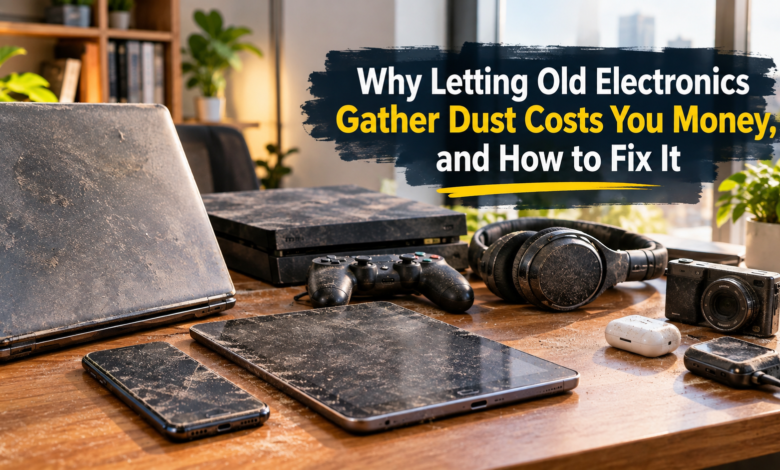
A drawer filled with unused electronics can look harmless. An old phone sits beside a tablet, a game console occupies a shelf, and an outdated laptop remains in a closet because someone might need it someday. Months pass. Then years. By the time the owner decides to sell, the devices may be worth much less than they were when they were first put away.
Electronics are particularly vulnerable to depreciation because new generations arrive quickly. Better processors, cameras, displays, batteries, and connectivity standards can change what buyers expect from used devices. At the same time, continued storage does not preserve value indefinitely. Demand changes, batteries age, and older hardware becomes less attractive compared with newer alternatives.
Turning unused electronics into cash therefore starts with recognizing that waiting has a cost.
Why Electronics Lose Value While They Sit Unused
Depreciation begins long before an electronic device stops working. A new phone, laptop, tablet, or gaming console typically commands a premium because buyers are paying for current technology and the manufacturer’s latest features. Once a newer generation appears, the older model becomes a used alternative.
Technology cycles can make this effect especially noticeable. A laptop with an older processor may still perform everyday tasks, yet buyers comparing it with newer systems may expect a lower price. The same principle applies to phones with aging cameras, shorter software support periods, or outdated connectivity.
Physical aging can continue as well. Batteries are not immune to time simply because a device remains in a drawer. Lithium-ion batteries gradually lose capacity through age and use. A device stored for a long period may also develop cosmetic wear, accumulate dust, or lose accessories that would otherwise help complete the package.
Demand is another factor. A popular model can retain interest among secondhand buyers, while a less desirable device may become difficult to sell even if it remains functional. Owners should therefore think of unused electronics as assets that can decline in market value rather than objects whose value stays fixed.
Start With a Simple Inventory Before Selling Anything
The first practical step is to find out exactly what is sitting around the home. Many households have more electronics than they realize because devices become scattered between bedrooms, offices, storage cabinets, and drawers.
An inventory does not need to be complicated. Owners can record the type of device, brand, model, storage capacity, working condition, accessories, and approximate age. Serial numbers can also be documented for personal records, although sensitive information should not be shared publicly when creating a listing.
Condition deserves a closer look. A phone with a cracked display should be separated from a fully functional phone. A laptop with a damaged charging port should not be valued in the same way as one that charges normally. The same distinction applies to consoles, tablets, cameras, headphones, and other electronics.
Once the inventory is complete, owners can group devices into three categories: items they still use, items they genuinely expect to need soon, and items that have remained unused for an extended period. The third category deserves particular attention.
That simple exercise can reveal where money is sitting idle. It also makes selling more efficient because the owner already knows which devices are available and what condition they are in.
Finding a Local Buyer Can Reduce the Friction of Selling
Online listings can produce strong offers, but they also require work. Owners have to photograph each device, write accurate descriptions, respond to messages, negotiate prices, arrange payment, and possibly package the item for shipping. Some listings receive little attention, while others attract buyers who negotiate aggressively.
Someone wondering where to sell electronics locally can compare nearby buyers that inspect items in person and make an offer based on condition. A local visit may avoid the listing, shipping, and negotiation steps associated with online marketplaces, especially when several devices need evaluation.
For example, a household might have an unused smartphone, an older tablet, and a gaming console. Creating three separate online listings could require several photographs, descriptions, conversations, and transactions. A local buyer may be able to evaluate the devices together, allowing the owner to understand what each item is worth and decide whether to proceed.
Convenience should still be balanced against price. A local quote may differ from the highest possible private-sale price because a buyer needs room for testing, refurbishment, operating costs, and eventual resale. That difference does not automatically make one route better than another. It simply reflects different levels of effort and risk for the seller.
Prepare Electronics Before Asking for a Quote
Preparation can make the evaluation process easier and protect personal information. The first priority is data. Phones, tablets, laptops, and consoles may contain photographs, saved passwords, documents, account credentials, browser histories, or payment information.
Before selling, owners should back up important files and confirm that the backup is usable. Accounts should then be removed using the manufacturer’s recommended process. Devices with activation locks or similar security systems can create problems for the next owner if those features remain connected to the previous account.
Physical preparation matters too. A basic cleaning can remove fingerprints, dust, and surface grime. However, electronics should never be soaked or cleaned with unsuitable liquids. Charging ports, vents, screens, and other sensitive areas require appropriate care.
Owners should also gather relevant accessories. A compatible charger, original cable, case, remote, controller, or box may help demonstrate that the device is complete. Missing accessories should be disclosed rather than overlooked.
Testing is equally useful. The owner can verify that the device powers on, charges, connects to the appropriate networks, displays images correctly, and performs its basic functions. Identifying faults before the sale makes the valuation process more transparent.
Compare Convenience, Price, and Effort
Different selling routes solve different problems. Private online listings can give owners more control over the asking price, but they usually require more time. Trade-in programs can simplify an upgrade, although the value may be tied to the retailer’s conditions. Local buyers can provide an in-person alternative for people who prefer a faster transaction.
The advertised amount should never be the only comparison point. An online listing might appear to offer more money, but the seller may spend days answering messages or eventually accept less after negotiation. Shipping, marketplace fees, payment risks, and return disputes can also affect the final result.
A local offer, by contrast, may be lower than an optimistic private-sale listing while requiring much less effort. For someone clearing out several unused devices, that difference can be meaningful.
Owners should also consider the age of the electronics. If a device is already declining in value, spending weeks trying to obtain a slightly higher price may not make financial sense. A quick sale can sometimes be preferable when the alternative is leaving the device unused while its market value continues to fall.
Turn Unused Devices Into Decisions, Not Clutter
Old electronics rarely become more valuable simply because they remain in a drawer. Their market position can weaken as newer models arrive, batteries age, accessories disappear, and consumer expectations change.
A simple home inventory provides a practical starting point. From there, owners can inspect condition, protect personal data, gather accessories, and compare selling routes based on the amount of money, time, and effort involved.
The goal does not have to be selling every old device immediately. Some electronics may still have a useful role in the household, while others may be better suited to resale. The important distinction is knowing which is which.
Once an unused device has reached the point where it serves no purpose, delaying the decision can carry a real opportunity cost. Turning it into cash while there is still demand gives the owner more control over the outcome and prevents another forgotten gadget from becoming tomorrow’s obsolete hardware.