GFXRobotection AI Software by GFXMaker: A Complete Guide to Features, Uses & How It Works

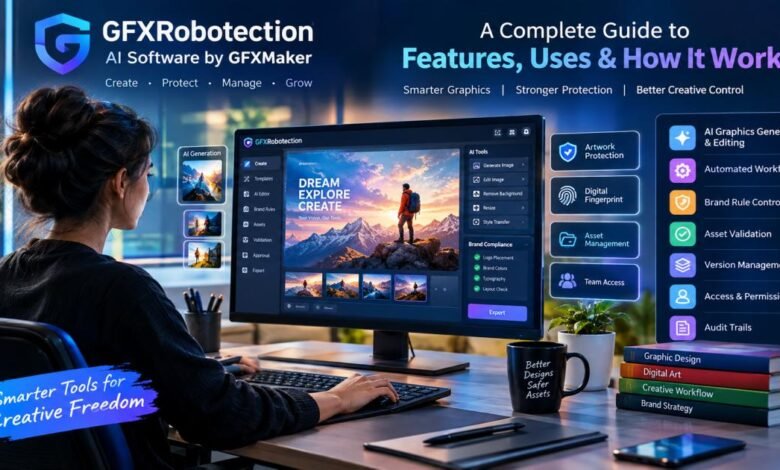
GFXRobotection AI software by GFXMaker is a design tool built to do two jobs at once: help you create graphics faster with AI, and help you guard those graphics once they’re online. That’s the short version. The rest of this guide walks through what it does, how it’s built, and where it fits for different types of users.
Artists post work online every day, and a growing share of it gets copied, scraped, or used to train other AI models without permission. This isn’t a rare event anymore. It happens to portfolios, product photos, and brand assets on a regular basis, and most creators have no easy way to catch it when it happens.
This guide covers what GFXRobotection AI software by GFXMaker claims to do, how its process reportedly works step by step, who it’s built for, and what still needs more public proof before you commit to it. You’ll also find a pricing check, a comparison against other design and protection tools, and a full FAQ section.
One note before you keep reading: public documentation on this product is limited right now. Some details come from GFXMaker’s own marketing, and some come from early write-ups by other sites. Wherever a claim can’t be independently confirmed, this guide says so directly instead of presenting it as settled fact.
What Is GFXRobotection AI Software by GFXMaker?
GFXRobotection AI software by GFXMaker is a hybrid platform that pairs AI design assistance with artwork protection features. Most tools pick one job. A design app helps you build graphics. A separate protection service scans for stolen images. GFXRobotection puts both under one roof.
On the design side, it reportedly offers layout suggestions, color palette generation, and style variations. On the protection side, it embeds a hidden marker inside image files and runs web scans to look for copies. The pitch is one workflow instead of two subscriptions.
How Does GFXRobotection AI Software by GFXMaker Work?
Based on available product descriptions, the process runs through six stages, from the first sketch to the final export.
Creating or Importing a Graphic
A user starts fresh inside the platform or uploads a finished file. This matters because it serves two different needs: designers who want AI help from the first step, and artists who already have finished work and just want it protected.
AI-Powered Processing
Once a file is in the system, the AI layer reportedly suggests layout changes, color combinations, and style options. This step is meant to cut down time spent on routine design choices, not replace a designer’s final call.
Brand and Design Rule Enforcement
Teams can reportedly set fixed rules ahead of time, such as approved fonts, colors, and logo placement. New designs then get checked against those rules automatically instead of through manual review.
Asset Validation
Before a file is marked final, it goes through a validation check. This step is built to catch formatting errors or rule violations before they reach a client or a live campaign.
Review and Human Approval
A person still signs off on the finished design. This step keeps a human in charge of judgment calls that automated checks aren’t built to make, like whether a design actually feels right for the brand.
Exporting the Final Asset
Once approved, the file exports in the needed format. Protection features, including the digital fingerprint, are reportedly applied at this stage.
Key Features of GFXRobotection
AI Graphics Generation and Editing
The platform offers AI-assisted tools for building and adjusting graphics, aimed at cutting manual design time on repeat tasks.
Automated Design Workflows
Tasks like resizing for different platforms or applying a saved template are reportedly handled with less manual input from the user.
Brand-Rule Controls
Businesses can set design standards once and apply them across every new asset, which keeps a consistent look across a team without constant manual checks.
Asset Validation
Files get checked against set rules before they’re marked complete, which cuts down on errors that slip through in fast-moving projects.
Asset and Version Management
Design files are reportedly stored, organized, and tracked through different versions, which helps when several people touch the same project over weeks or months.
Access and Permission Controls
Teams can limit who can view, edit, or export specific files. This matters most for larger organizations managing sensitive brand assets across departments.
Audit Trails
A record of changes and actions on a file shows who did what and when, which supports accountability on shared projects.
GFXRobotection for Digital Artwork Protection
This is the feature drawing the most attention, and it’s easy to see why. The described method centers on an invisible digital fingerprint placed inside an image file. Unlike a visible watermark, this marker isn’t meant to be seen or removed through basic cropping or editing.
Alongside the fingerprint, the software reportedly runs ongoing web scans to find matches or close copies of protected artwork. If a match turns up, the creator gets an alert and can decide on next steps, whether that’s a takedown request or another form of action.
This kind of protection responds to a shift in how art gets copied. It’s not just one person saving and reposting an image anymore. AI models can train on thousands of scraped images at once, producing results that mirror an artist’s style without copying a single file directly. A visible watermark or basic metadata tag was never built to catch that kind of use, which is why fingerprint-based tools have picked up interest across creative communities.
Who Can Use GFXRobotection?
Freelance Graphic Designers
Independent designers who sell or license their work gain a built-in way to track where their designs show up after they’re sent to a client or posted publicly.
Digital Artists and Illustrators
Artists who post work on social platforms sit in the group most affected by scraping and unauthorized reuse, since public posts are the easiest targets for automated copying.
Marketing Teams
In-house marketing groups can use the AI design tools to move faster on campaign graphics while keeping brand rules intact across every asset.
Creative Agencies
Agencies managing several client brands at once can use rule enforcement and permission controls to keep guidelines from getting mixed up between accounts.
Game and Media Studios
Studios producing large volumes of visual assets may find the version tracking and validation steps useful for keeping fast-moving projects organized.
Businesses With Brand-Heavy Content Workflows
Any company publishing a high volume of branded graphics, such as a retail or e-commerce brand, can use the automation and rule-checking features to keep output consistent across teams and time zones.

Practical Uses of GFXRobotection
Protecting Portfolio Artwork
Artists showcasing work online can use the fingerprinting feature to attach a traceable record to their original files before publishing.
Maintaining Brand Consistency
Rule-based checks help keep colors, fonts, and logo use aligned with a company’s guidelines across every single asset, not just the ones a manager happens to review.
Producing Marketing Graphics
The AI design tools can speed up the creation of social posts, ad banners, and other campaign creative on tight deadlines.
Managing Large Asset Libraries
Version tracking and organization tools help teams keep tabs on hundreds or thousands of files across ongoing projects.
Streamlining Repetitive Design Tasks
Resizing, reformatting, and applying templates across many assets can reportedly run through automation instead of manual repetition for each file.
Controlling Creative Assets Across Teams
Permission settings let organizations decide who can edit or export sensitive brand files, which cuts down on accidental changes from team members outside a project.
GFXRobotection vs. Traditional Artwork Protection
Traditional protection methods, like visible watermarks or basic metadata tags, are easy to bypass. A watermark gets cropped out in seconds. Metadata gets stripped the moment a file is re-saved or re-uploaded to another platform. Neither method holds up well against scraping tools built to process thousands of images at once.
GFXRobotection’s approach is built around a marker that stays inside the file itself, paired with active web scanning instead of a passive stamp. This is a real shift from a static watermark, since it doesn’t depend on the copier leaving anything visible behind. It’s a more current answer to a problem that has changed shape as automated scraping has become common across creative platforms.
Benefits of GFXRobotection for Creators and Businesses
The main benefit is combining two needs, design speed and artwork protection, into one place instead of managing separate tools and separate logins. For solo creators, this typically means less time spent on manual protection steps after a design is finished. For businesses, brand-rule automation can cut down the back-and-forth of manual design reviews between teams.
The alert system, if it performs as described, gives creators an active way to catch unauthorized use early. On average, creators using only visible watermarks or manual reverse-image searches find out about copying weeks or months after it happens, if they find out at all. An automated alert system closes that gap by design.
Limitations and Potential Concerns
Limited Independent Product Verification
Most of what’s available about GFXRobotection right now comes from the company’s own marketing and a small number of third-party write-ups. Independent reviews, case studies, or hands-on testing from established tech publications aren’t widely available at this time.
Unclear Public Pricing or Availability
A clear, published pricing page isn’t easy to find. This makes it hard for a potential user to compare cost against other tools without contacting the company directly.
Questions About Technical Documentation
Detailed technical documentation, including how the fingerprinting method holds up against advanced photo editing or heavy compression, isn’t fully public. This leaves open questions for technical users who want proof before they commit.
Privacy and Uploaded-Asset Considerations
Any tool asking users to upload original artwork needs a close look at its data handling. Creators should confirm how files are stored, who can access them, and how long they stay on company servers before uploading finished work.
Platform and Integration Compatibility
How well GFXRobotection fits into existing pipelines built around tools like Adobe Photoshop or Illustrator isn’t fully clear from public sources yet.
Is GFXRobotection Legit? What Can Be Verified?
Based on current public information, GFXRobotection appears to be a real product actively marketed under the GFXMaker name, and it targets a problem that’s well documented across creative and legal circles: AI scraping and style replication. Lawsuits and public debate over AI training on scraped artwork have been building for years, so the problem this tool addresses is genuine.
What’s harder to confirm right now is the depth of independent testing behind specific claims, such as detection accuracy or how the fingerprint holds up against determined removal attempts. Anyone considering this software should treat it the way they’d treat any newer product: read the details closely, ask the company direct questions, and test it on a small batch of files before relying on it for an entire portfolio.
GFXRobotection Pricing and Plans
At the time of writing, a detailed public pricing page isn’t widely available. Interested users should check official GFXMaker channels directly for current plans, since pricing on AI-based tools tends to shift as products add features and gain more users.
GFXRobotection vs. Other AI Graphics and Protection Tools
Most tools in this space focus on one job. Some platforms specialize in AI graphic generation alone, without any protection layer. Others focus only on copyright monitoring or watermarking, without design assistance built in.
GFXRobotection’s position is different because it tries to cover both jobs in one product. That can suit someone who wants fewer subscriptions and a simpler workflow. At the same time, a combined tool doesn’t always match the strength of a dedicated design app or a dedicated protection service built solely around one function. Anyone comparing options should weigh a single tool that handles two jobs reasonably well against two separate tools that each do one job very well.
Pros and Cons of GFXRobotection
Pros
- Combines design assistance and artwork protection in one workflow
- Targets a real and growing problem tied to AI scraping
- Brand-rule automation can save review time for teams
- Version tracking and permission controls suit collaborative projects
- Alert-based monitoring gives creators an active defense instead of a passive one
Cons
- Independent reviews and hands-on testing remain limited
- Public pricing details aren’t clearly available
- Technical depth behind the protection method isn’t fully documented
- Integration with established design pipelines isn’t fully clear
- Newer products carry more uncertainty than tools with a longer track record
Is GFXRobotection Worth Considering in 2026?
The problem GFXRobotection targets is real and growing. Artists and businesses need better tools to protect original work as automated scraping becomes routine. That alone makes this category worth tracking.
Whether this specific tool is the right pick depends on comfort level with a newer product that has limited independent verification so far. A solo creator open to testing new protection methods on a small scale could reasonably try it out. A business managing sensitive brand assets at scale may want to wait for more public reviews and clearer technical documentation before a full rollout.
Final Verdict
GFXRobotection AI software by GFXMaker points at a real and rising problem: original artwork gets copied and scraped faster than most creators can track on their own. Pairing AI design help with active protection is a sensible response to that problem, and it’s a combination few competitors currently offer under one roof.
That said, this is still a newer product with limited independent testing available to the public. Anyone interested should treat it the way they’d treat any new tool handling original work: ask direct questions, start with a small test batch, and confirm pricing, data handling, and technical performance before relying on it fully. The category itself will only grow in importance as AI tools keep expanding, and staying informed now puts creators and businesses in a stronger position later.
FAQs
What is GFXRobotection AI Software by GFXMaker?
GFXRobotection AI software by GFXMaker is a design and artwork-protection platform that combines AI-assisted graphic tools with digital fingerprinting and web scanning meant to catch unauthorized use of artwork.
How does GFXRobotection work?
It reportedly runs through a workflow of creating or uploading a graphic, AI-assisted editing, brand-rule checks, validation, human approval, and export with protection features applied at the final step.
Is GFXRobotection an AI graphics generator?
It includes AI-assisted design features like layout and color suggestions, but its main focus is artwork protection rather than acting as a standalone graphics generator.
Does GFXRobotection use digital fingerprinting?
Yes. Based on available descriptions, it places an invisible fingerprint inside image files and pairs it with ongoing web scans to detect copies.
Who should use GFXRobotection?
Freelance designers, illustrators, marketing teams, agencies, and businesses running brand-heavy content workflows are the groups most likely to find it useful.
Is GFXRobotection free?
Clear public pricing isn’t widely available right now, so this should be confirmed directly through official GFXMaker channels before signing up.
Is GFXRobotection legitimate?
It appears to be an actively marketed product addressing a real industry problem, though independent, third-party verification of its specific technical claims remains limited.
Is GFXRobotection available for commercial use?
Details on commercial licensing aren’t fully clear from public sources, so this is best confirmed directly with the company before using it in a business setting.