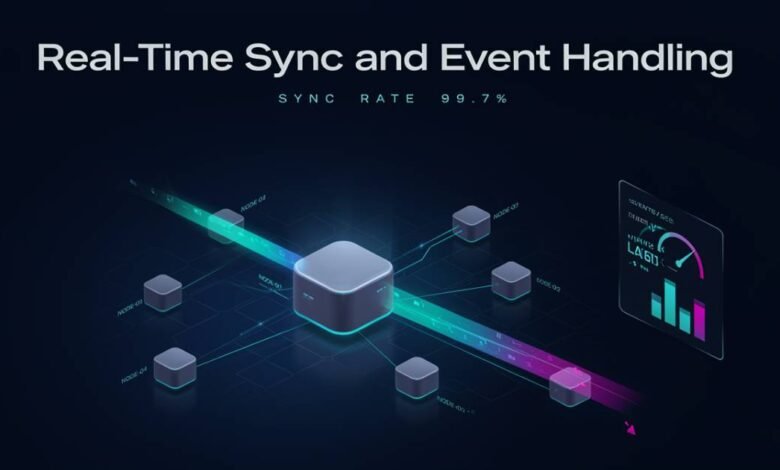
The architectural requirements for web-based interactive media have shifted substantially as micro-session software models gain prominence across desktop and mobile platforms. Unlike conventional web applications that rely on standard request-response cycles, fast-paced interactive titles—such as multiplier crash mechanics, tile-reveal mines, and instant action games—require continuous real-time data flow. These applications execute state changes in fractions of a second, presenting distinct engineering challenges regarding network protocol selection, client-side rendering efficiency, and backend concurrency.
Designing a system capable of managing high-frequency state updates for thousands of concurrent users requires a specialized tech stack. When a single session involves multiple state changes per second—such as live coefficient calculations, instantaneous risk decisions, and synchronized player feeds—the network stack, serialization layer, and rendering engine must operate in tight synchronization.
Stateful Networking and Real-Time Communication Protocols in Short-Cycle Web Games
Traditional HTTP polling mechanisms introduce prohibitive overhead when applied to high-frequency interactive applications. Each standard HTTP request carries redundant header data and requires TCP connection handshakes that create latency penalties between 100 and 300 milliseconds. In fast-action environments where user interactions occur within narrow millisecond windows, this delay causes visual desynchronization and delayed input registration. Modern real-time game engines overcome these constraints by establishing persistent, full-duplex TCP connections via WebSockets, allowing bidirectional data transmission over a single long-lived socket.
When engineering responsive web and mobile gaming interfaces, developers rely on optimized WebSocket frames and binary serialization formats like Protocol Buffers or MessagePack instead of heavy JSON payloads. For instance, in fast-paced multiplier environments like the desi instant games app, maintaining sub-50-millisecond state updates ensures that real-time multiplier curves, active player bet feeds, and cash-out triggers remain perfectly synchronized across thousands of simultaneous connections without server-side thread bottlenecking. This architectural choice minimizes round-trip time (RTT) and reduces client-side CPU consumption during continuous graphics rendering.
To ensure resilience across fluctuating network conditions, particularly on cellular data networks, real-time architectures implement hybrid communication strategies. While WebSockets handle primary state streaming, Server-Sent Events (SSE) offer a lightweight alternative for uni-directional broadcast feeds, such as global leaderboard updates or live public chat channels. Additionally, robust client-side socket wrappers employ automated heartbeat signals, exponential backoff reconnection logic, and session state caching to handle temporary connection drops without losing the user’s active session state.
Client-Side Rendering Optimization and Frame Rate Stability
Delivering smooth visual updates in browser-based micro-games requires precise management of the client-side rendering pipeline. Traditional DOM manipulation is far too slow for games requiring continuous 60 frames per second (FPS) rendering. Instead, modern web implementations utilize HTML5 Canvas or WebGL via specialized rendering engines such as PixiJS or Phaser. WebGL offloads graphics processing directly to the GPU, enabling complex particle systems, animated vector paths, and dynamic UI elements to render efficiently even on mid-tier mobile hardware.
Memory management is another critical factor in maintaining frame rate stability. Frequent object creation and destruction trigger automatic JavaScript garbage collection cycles, which introduce sudden frame drops or visual stutter. Engine developers mitigate this issue by implementing object pooling patterns for frequently instantiated assets, such as typed array buffers, particle sprites, and floating text elements.
| Optimization Layer | Technical Implementation | Performance Benefit |
|---|---|---|
| Network Serialization | Protocol Buffers / Binary Frames | Reduces payload size by up to 70% compared to raw JSON |
| Transport Protocol | Persistent WebSockets with Fallback | Lowers packet transport latency below 50ms |
| Rendering Engine | WebGL Context with Hardware Acceleration | Maintains stable 60 FPS on low-power mobile GPUs |
| Memory Management | Pre-allocated Object Pools | Prevents runtime garbage collection micro-pauses |
Cryptographic Verifiability and Distributed State Verification
Trust and transparency are essential components of modern instant-action game design. Users expect mathematical proof that game outcomes are determined fairly and without real-time manipulation. To achieve this without introducing server-side database bottlenecks for every micro-turn, developers implement cryptographic algorithms known as Provably Fair systems.
These verification protocols rely on SHA-256 cryptographic hash functions combined with seed generation algorithms. Before a game round commences, the server generates a random seed, hashes it, and sends the hash to the client. The client device provides a secondary seed, either generated locally or supplied by the user interface. When the round concludes, the server reveals the original unhashed server seed.
- Pre-round Hash Commitment: The server publishes the hashed representation of the secret seed prior to any player action, freezing the predetermined result.
- Client Seed Integration: The final random output is calculated by combining the server seed, client seed, and a sequential nonce value through HMAC-SHA256.
- Client-Side Verification: After the round, the client application independently re-hashes the revealed server seed to verify that the initial hash commitment was untampered.
This cryptographic workflow allows players to audit any game outcome locally in their browser without requiring third-party server validation or complex database lookups during active gameplay.
Edge Compute Infrastructure and Load Balancer Strategy
Scalability in high-concurrency micro-gaming platforms depends heavily on distributed server topologies. Traditional monolithic backend servers quickly become bottlenecked when handling thousands of simultaneous WebSockets connections. Modern platform infrastructure addresses this through distributed node clusters managed by reverse proxies and load balancers like NGINX or HAProxy.
Deploying edge workers on Content Delivery Networks (CDNs)—such as Cloudflare Workers or AWS Lambda@Edge—allows platforms to offload initial authentication, regional routing, and static asset distribution to servers physically closest to the end user. Meanwhile, background state synchronization between server nodes relies on high-throughput, in-memory datastores like Redis Enterprise or Apache Kafka. Redis pub/sub channels distribute game state broadcasts across multiple application servers, ensuring that every connected client receives state updates within milliseconds regardless of which cluster node maintains their active socket connection.
Structural Priorities for Next-Generation Fast-Session Web Architecture
Building high-performance web applications for real-time micro-gaming requires a holistic engineering approach that addresses latency at every layer of the system. By combining persistent WebSocket connections, binary data serialization, WebGL hardware acceleration, and edge infrastructure, developers can deliver fluid, responsive user experiences that handle millions of daily interactions seamlessly. As web technologies continue to evolve, the integration of WebAssembly (Wasm) and HTTP/3 protocols will further reduce execution overhead, establishing even higher standards for fast-session digital entertainment.
Read more articles from IPHLPSVC